Dyson sphere

The Ultimate Dyson Sphere: Engineering the Future of Stellar Energy
Humanity craves more energy every year. Our planet's fuels run low, and fossil sources harm the air we breathe. What if we could grab all the power from our sun? A Dyson Sphere offers that dream a giant setup around a star to trap its full light and heat.Freeman Dyson first thought of this in 1960. He pictured a huge structure that wraps a star to use every bit of its energy. This megastructure could change how civilisations grow. We call it stellar engineering, a step toward the Kardashev Scale's Type II level, where societies control a whole star's output.
Understanding the Dyson Concept and Its Scientific Basis
The Freeman Dyson Paper and Initial Conception
Freeman Dyson wrote a key paper in 1960 called "Search for Artificial Stellar Sources of Infrared Radiation." He aimed to spot signs of advanced life out there. Dyson did not mean a solid wall around the sun. Instead, he saw a cloud of small collectors in space, like satellites buzzing around.The sun puts out about 3.8 x 10^26 watts of power each second. That's a number too big to grasp. A Dyson setup could catch it all, turning waste into useful energy for far-off worlds.This idea sparked talks in science circles. It pushes us to think about stars as power plants, not just lights in the sky.
Differentiating Sphere, Swarm, and Bubble
People often mix up the types of Dyson structures. Each has its own design and problems.
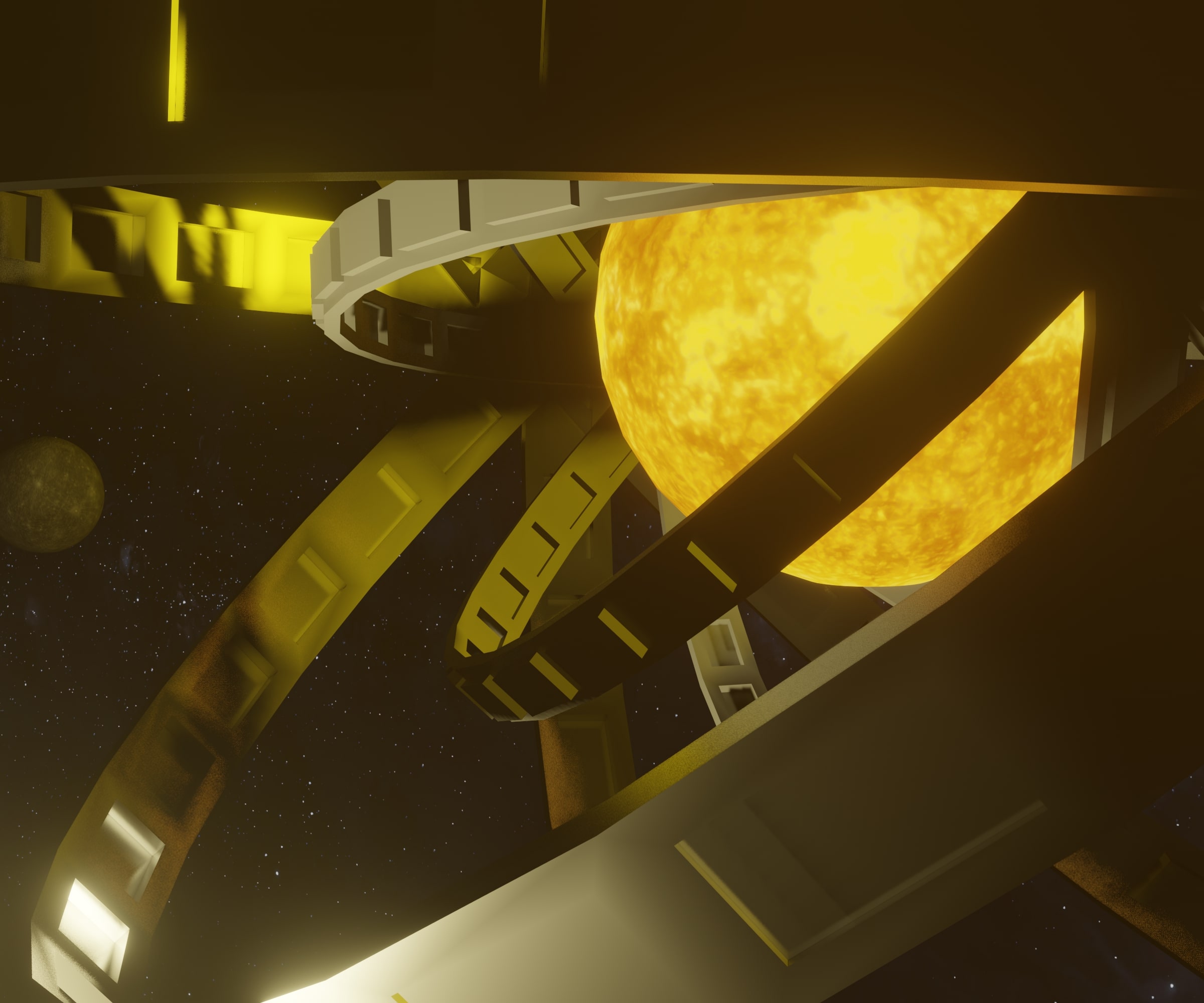
- Dyson Sphere (Solid Shell): This is the old image of a full ball around the star. It sounds cool, but gravity would crush it. No known material could hold it up without breaking.
- Dyson Swarm: Here, millions of small satellites orbit the star. They stay apart and easy to fix. Experts like this one best because it fits real physics.
- Dyson Bubble or Ring: These use statites—devices that hover on light pressure. A ring might circle one path, while a bubble spreads out like soap on water.
The swarm wins for most plans. It lets builders start small and add more over time. Bubbles add tricks with light sails, but they need perfect balance.
Placement on the Kardashev Scale
The Kardashev Scale measures how advanced a civilisation is by energy use. Type I taps a planet's power. Type II grabs a star's full output that's where Dyson structures fit.Nikolai Kardashev made this scale in 1964. A Type II group could power huge ships or fix worlds. Think of it as jumping from campfires to harnessing a volcano.Astrophysicists say reaching this takes billions of years for us. But some stars show odd signs, hinting at alien tries. Energy needs skyrocket, so only top civilisations pull it off.
The Unprecedented Engineering Challenges
Material Science and Structural Integrity
Building anything Dyson-sized needs stuff we can't make yet. A full shell would take apart planets like Jupiter for metal. Even a swarm calls for trillions of tons of steel or better.Materials must fight sun heat and pull. Carbon nanotubes might work they're strong as diamond threads. But we need them in space amounts, not lab bits.Mass counts huge. A partial swarm around our sun might weigh Earth's mass spread thin. That's why experts eye asteroids for raw goods. Without new tech, this stays a dream.
Orbital Mechanics and Stability
Orbits around a star get tricky with so many parts. Billions of collectors must dodge each other, or crashes wreck the lot. Gravity tugs them in wrong ways over time.Engineers would use math models to space them out. Small pushes from thrusters keep paths steady. It's like herding cats in zero gravity, but with computers.Solar wind adds chaos, blowing sails off course. Long-term, the star's spin perturbs orbits too. Solving this means smart AI to watch and adjust every piece.
Thermal Management and Waste Heat
Catch all that sun power, and you make waste heat just as big. The structure glows in infrared, like a hot oven at night. That's how we might spot alien ones by their heat sign.Our sun's light is mostly visible, but waste shifts to longer waves. Telescopes hunt for stars dim in light but bright in IR. No natural cause fits that pattern well.Take Tabby's Star, or KIC 8462852. It dims weirdly, sparking Dyson talk in 2015. Dust clouds explain it now, but the hunt goes on. These signs could prove stellar engineering elsewhere.
Construction Methodology: From Theory to Reality
Resource Acquisition: Asteroid Mining and Planetary Disassembly
You can't build from Eart too far and heavy. Start with space rocks. Asteroids hold metals like iron and nickel, perfect for frames.Mining bots would grab chunks and melt them in orbit. Some plans say break up Mercury, our closest rocky world. It's barren, so no loss.First steps include robotic drills and haulers. We test this with missions like NASA's asteroid plans. Over decades, stockpiles grow for the big build.
Launch and Deployment Automation
No humans can do this alone. Send self-copying robots, like von Neumann probes. They mine, build, and make more of themselves.Fleets launch from Earth or Moon bases. Each probe assembles one collector, then moves on. It takes centuries, but automation handles the scale.Space factories churn out parts. Lasers weld them in vacuum. This chain turns raw ore into a sky full of energy traps.
Powering the Initial Construction Phase
How do you start without power? Build small solar farms first. They catch enough sun to run the miners and makers.These bootstrap arrays grow like a snowball. Early ones power bigger ones, snowballing to full swarm. Fusion or nuclear helps for deep space work.Energy bootstraps solve the chicken-egg puzzle. We see hints in today's solar panels on satellites. Scale that up, and the star becomes your factory.
Implications for Advanced Civilisations
Energy Abundance and Technological Leaps
With star power, limits vanish. You could run brain-like computers the size of planets Matrioshka Brains for deep thoughts.Interstellar travel gets real. Giant lasers push ships to other stars. Terraform dead worlds with heat and light from afar.Daily life changes too. Endless clean energy ends wars over oil. Societies focus on art, science, not scraping by.
Communications and Detection Signatures
Dyson builds scream "life here!" Their IR glow stands out from normal stars. SETI teams scan for that beacon.Radio leaks might come from construction noise. But heat is the big clue. We could chat with builders if we spot one.This flips the search. Instead of listening, we look for heat bumps. Tools like James Webb Telescope hunt these signs now.
Societal and Political Ramifications
Committing to a Dyson project binds generations. Leaders must agree on shared goals across centuries. It tests unity like nothing else.Cultures shift to long views. Kids learn space history young. Politics favour bold plans over short wins.What would we give up? Maybe some freedom for the greater good. But rewards build a golden age.
The Horizon of Stellar Engineering
The Dyson Swarm stands as the top choice for this megastructure. It dodges the pitfalls of solid shells while grabbing star energy.Today, it lives in theory. Material shortages and power hurdles keep it far off. Yet it marks the path for Type II civilisations on the Kardashev Scale.Push forward in robots and new materials, and we edge closer. Imagine your grandkids orbiting the sun, powered by its heart. What step will you take to spark that future? Dive into space news and support science t's our next big leap.