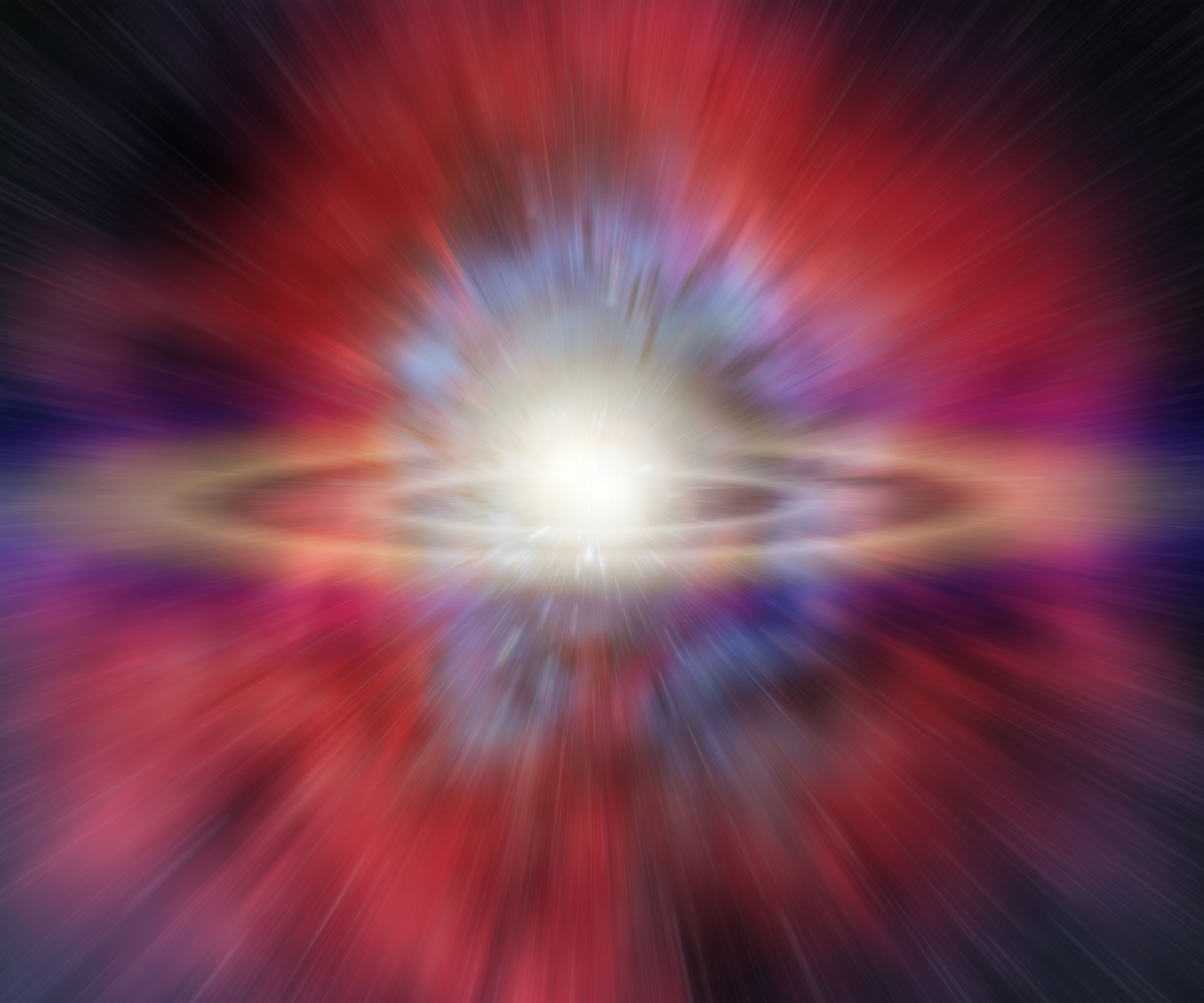
Supernova Explosions
Imagine a single star that shines brighter than a billion suns. It lights up the night sky for weeks. This is a supernova explosion, the grand finale of a star's life. These blasts shape galaxies and create the stuff that makes up planets like Earth. Without them, life as we know it might not exist.A supernova is a huge blast when a star dies. It happens to big stars or in special star pairs. The event destroys the star but spreads key elements across space. Think of it as nature's way of recycling on a massive scale. This piece breaks down supernova types, the forces behind them, their effects on the cosmos, and what we've seen lately in the stars.We'll look at how stars build up to this point, the two main explosion paths, the wild physics involved, and the big changes they cause. You'll see why these events matter to astronomers and to us down here.
The Stellar Lifecycle Preceding Cataclysm
Stars live long lives, but massive ones burn fast. They start like our Sun, fusing hydrogen into helium. Over time, they grow hotter and bigger. Their end comes in a bang.
What Defines a Massive Star
Stars with at least eight times our Sun's mass head toward supernova explosions. These giants guzzle fuel quick. A star that big might last just a few million years, not the billions our Sun will see.Smaller stars, under eight solar masses, cool off into white dwarfs. They fade quietly. Massive ones, though, keep fusing heavier stuff until they can't. This sets the stage for total collapse.Their fast fuel use means short lives. You could say they're like sports cars that run out of gas before the race ends.
Fusion and the Iron Core Crisis
Inside a massive star, layers of elements build up. The core fuses hydrogen to helium first. Then helium to carbon, carbon to oxygen, and so on up to silicon. Each step speeds up the burn.When silicon turns to iron, trouble hits. Iron fusion takes energy in, not out. The star's core stops heating itself. Without that push, gravity wins.This iron core grows until it hits a limit. Fusion halts, and the core starts to shrink. It's the tipping point for disaster. The star's heart fails, just like that.
Gravitational Collapse and Neutron Star Formation
With no fusion, the core falls in on itself. It collapses in seconds, faster than you can blink. Gravity crushes it to insane densities.Electrons get squeezed into protons, making neutrons. This neutron pressure fights back, but for a bit. The core ends up as a tiny ball, a neutron star, about 20 kilometers wide.These remnants pack the mass of our Sun into a city-sized space. One teaspoon of it weighs as much as a mountain. For Type II supernovae, this is the leftover heart after the blast.
Classification: The Two Main Paths to Supernova
Supernovae come in flavors based on what causes them and how they look. Spectra, the light patterns, help sort them. Two big types stand out: core-collapse and thermonuclear.
Type II: Core-Collapse Supernovae (Massive Stars)
These happen when a massive star's iron core gives way. The outer layers blast off in a huge shock. Hydrogen lines show up in their light, a key sign.Take SN 1987A, spotted in 1987 near our galaxy. It was the brightest in centuries. We saw its light and even caught neutrinos from it. That event taught us tons about the process.Type II blasts vary in brightness and shape. They light up hydrogen-rich shells. This type links straight to the star life's end we talked about earlier.
Type Ia: Thermonuclear Supernovae (White Dwarts)
Picture a white dwarf in a pair with another star. It pulls gas from its buddy, gaining mass. At 1.4 solar masses, the Chandrasekhar limit, it ignites.The whole thing fuses in a runaway burn. No hydrogen lines here; it's all carbon and oxygen. These explosions shine at the same peak brightness every time.That's why they're standard candles. Astronomers use them to gauge distances across space. They help map the universe's growth. Without Type Ia, we'd know less about dark energy.
Other Rare Supernova Types (Ib/Ic)
Some massive stars lose outer layers first. Type Ib lacks hydrogen but has helium lines. Type Ic misses both, stripped bare by winds or a companion.These come from stars over 20 solar masses often. They're like Type II but without the full envelope. Examples pop up in our galaxy's history, though rare to catch live.They still blast out elements but look different in spectra. Astronomers study them to learn about star stripping.
Physics of the Explosion: Shockwaves and Neutrinos
The blast's power comes from deep physics. Neutrinos lead the way, then shockwaves follow. It's a chain of events that rips the star apart.
The Role of Neutrino Burst
When the core collapses, it heats to billions of degrees. That makes a flood of neutrinos, tiny particles that barely interact with stuff. They carry off 99 percent of the energy.Just one percent goes to the blast's light and motion. But that tiny bit is still huge, like a trillion atomic bombs. Neutrinos zip out first, before light even escapes.In SN 1987A, detectors caught thousands of these particles. It proved the theory right. Without neutrinos, the explosion might fizzle.
Rebounding Shockwave Dynamics
The core hits neutron density and bounces back. This rebound sends a shock front outward. At first, it stalls in the star's layers.Neutrinos help revive it by dumping heat. The shock then races through, blowing off the outer shell at 10 percent light speed. It's like a piston pushing air in a pipe.This process takes minutes to hours. The star swells then shreds. What follows is a glowing cloud expanding into space.
Supernova Remnants (SNRs)
After the blast, a shell of hot gas speeds away. It slams into space's dust and gas, forming remnants. These SNR glow in X-rays and radio waves.The Crab Nebula is a famous one, from a 1054 supernova. You can spot it with binoculars on a clear night. Look for the fuzzy patch in Taurus.Amateur stargazers, grab a telescope and hunt SNRs. Apps like Stellarium show where to point. It's a fun way to see history's echoes.
Cosmic Consequences: Seeding the Universe with Elements
Supernovae don't just destroy. They build too. They forge heavy atoms and stir up new stars.
Nucleosynthesis Beyond Iron
Stars make elements up to iron in normal fusion. For heavier stuff, like gold or uranium, you need the blast's chaos. The r-process grabs neutrons fast during the explosion.Neutrons bombard seeds, building big atoms quick. This happens in the neutron-rich core. Without supernovae, no heavy elements for jewelry or reactors.We're all star stuff, as Carl Sagan said. Your body has atoms born in these fires billions of years back. It's a wild thought.
Triggering Star Formation
The shockwave compresses nearby gas clouds. That squeezes them enough to start collapsing. New stars form from the debris.In the Orion Nebula, supernova shocks might spark baby stars now. It's a cycle of death and birth. Galaxies grow this way, layer by layer.Supernovae clear space too, sweeping junk. But their push often lights the next round. Balance of boom and bloom.
Black Holes and Pulsars
Not all blasts leave neutron stars. If the star tops 20-30 solar masses, the core collapses further. Gravity wins, forming a black hole.Pulsars are spinning neutron stars that beam radio waves. Like lighthouses in space. The Crab Pulsar spins 30 times a second.Black holes suck in light, invisible but detectable by effects. Both remnants spin tales of the blast's power. They shape galaxy centers over time.
Observing and Measuring Supernovae Across Cosmic Time
Catching a supernova live is rare but thrilling. Tools like telescopes track their glow and waves. We learn from light to ripples in space.
Light Curves and Luminosity
A supernova's brightness rises fast then fades. Type Ia peaks steady, then drops smooth. Type II rises slower, with a plateau.These curves tell the type and distance. Pan-STARRS scans skies for new ones. The Vera C. Rubin Observatory will spot thousands soon.By measuring fade rates, we clock ages. Old supernovae in far galaxies show universe history. It's like reading a cosmic timeline.
Gravitational Waves and Multi-Messenger Astronomy
Core collapses twist space, sending gravitational waves. LIGO spots them from merging black holes, but supernova waves are next prize. Imagine detecting one before the light.Neutrino nets like IceCube watch for bursts. Combine with telescopes for full picture. Multi-messenger means piecing clues from all signals.This approach changed astronomy in 2017 with a neutron star smash. Supernovae will follow, revealing hidden blasts.
Conclusion: The Enduring Legacy of Stellar Fire
Supernovae recycle stars into elements we need. They destroy one to build many. From iron cores to gold specks, they're the universe's forge.Type Ia blasts measure expansion, hinting at dark energy's pull. We've mapped billions of years this way. Our view of space owes them big.Next time you see stars, remember: their deaths made you. Grab a book on astronomy or join a star party. Explore the skies and feel connected to these brilliant ends. What supernova story will you chase?